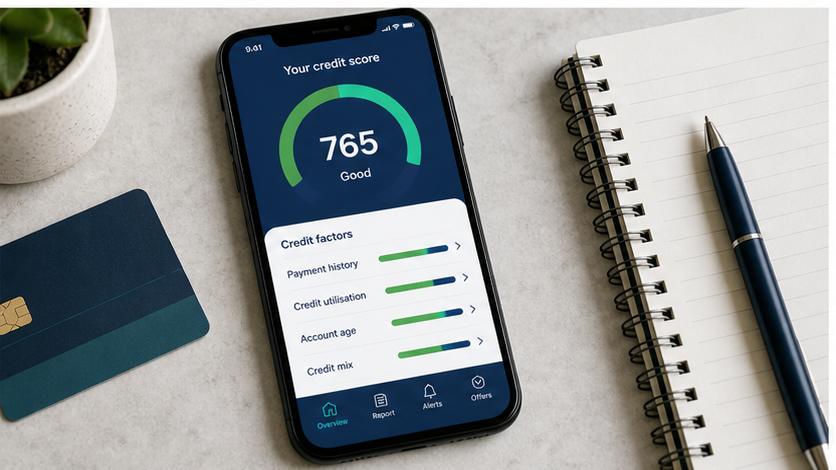

Average Credit Score
This guide explains what the average credit score in the UK is, why it matters, and how you can check your own standing with the main credit reference agencies. Understanding where you sit compared to the national average is the first step towards improving your financial health and increasing your chances of being approved for loans, mortgages, and credit cards. We will walk you through interpreting your score, identifying key influencing factors, and taking practical steps to build a stronger credit profile.
Fast Answer
- Average Score Range: There is no single "average". Scores from 881-960 (Experian) and 531-670 (Equifax) are typically considered 'Good'.
- Key Agencies: The three main UK Credit Reference Agencies (CRAs) are Experian, Equifax, and TransUnion.
- Cost to Check: £0. You have a statutory right to view your full report for free.
Before You Start
- Personal Details: Have your full name, date of birth, and current address ready.
- Address History: You will need your addresses for the past 3-6 years for identity verification.
- Email Address: A valid email address is required to create online accounts with credit score providers.
- Financial Details: Some services may ask questions about your bank accounts or existing credit agreements to confirm your identity.
Step-by-Step Instructions
Understand What a Credit Score Represents
A credit score is a three-digit number that summarises the information in your credit report. Lenders use it as a quick indicator of your financial reliability and the level of risk involved in lending to you. A higher score suggests you have a strong history of managing debt responsibly, making you a more attractive applicant.
This score is calculated by a Credit Reference Agency (CRA) using data from your credit report. This report includes details of your credit accounts (like credit cards, loans, mortgages), your payment history, any court records (like CCJs), and whether you are on the electoral roll. It's a snapshot of your creditworthiness at a specific moment in time.
Identify the UK's Main Credit Reference Agencies
In the UK, there are three main CRAs that lenders use. It's vital to know them because they don't share information, meaning your score can and will differ between them. A lender might check your file with one, two, or all three agencies.
- Experian: Their score ranges from 0 to 999. A score of 881-960 is considered 'Good', and 961-999 is 'Excellent'.
- Equifax: Their score ranges from 0 to 1000. A score of 531-670 is 'Good', and 671-1000 is 'Excellent'. (Note: The previous scale up to 700 is being phased out).
- TransUnion: Their score ranges from 0 to 710. A score of 604-627 is 'Good', and 628-710 is 'Excellent'.
Because of these different scales, you can't directly compare a score of 700 from Experian to a 700 from TransUnion. You must assess each score within the context of its own agency's rating system.
Check Your Score and Report with Each Agency for Free
You have a legal right to access your full statutory credit report from each agency for free. While the agencies themselves may push paid subscriptions, there are several well-known services that provide ongoing free access to your score and report.
- For your Equifax score, you can use services like ClearScore.
- For your TransUnion score, you can use services like Credit Karma.
- For your Experian score, you can use the Experian free account or the MoneySavingExpert Credit Club.
Sign up for a service linked to each of the three agencies. This gives you a comprehensive view of your credit profile. The sign-up process is straightforward and typically takes less than five minutes per service, requiring the personal and address details you gathered earlier.
Compare Your Score to the National "Average"
Once you have your scores, you can see where you stand. While there isn't a single official "average credit score" for the entire UK population, the CRAs provide bandings like 'Poor', 'Fair', 'Good', and 'Excellent'. The goal is to be in the 'Good' or 'Excellent' category.
For example, if Experian states the UK average is around 887 (a figure they have cited previously), and your score is 750, you know you are below average and may face higher interest rates or find it harder to get approved. Conversely, a score of 970 puts you in the top tier of applicants. The key is not to fixate on a specific number but to aim for the higher bands, as this signals low risk to lenders.
Analyse the Factors That Influence Your Score
Your credit report is more important than the score itself. The report shows the 'why' behind the number. Scrutinise your reports from each agency, paying close attention to these five key areas:
- Payment History: Are all your payments marked as 'on time'? Any late or missed payments, even by a day, can significantly lower your score. These stay on your report for six years.
- Credit Utilisation: This is the amount of credit you are using compared to your total available credit. For example, if you have a £2,000 balance on a £4,000 credit card limit, your utilisation is 50%. Aim to keep this below 30% for the best results.
- Length of Credit History: A longer history of well-managed accounts is positive. This is why it can be wise to keep old, unused accounts open (as long as they don't have an annual fee).
- Hard Searches: When you formally apply for credit, a 'hard search' is recorded. Too many of these in a short period can suggest financial difficulty and lower your score.
- Electoral Roll Registration: Being registered to vote at your current address is a powerful and easy way to boost your score, as it confirms your identity and address stability.
Identify and Correct Any Errors on Your Report
Mistakes on credit reports are more common than you might think. An incorrect address, a payment wrongly marked as late, or a fraudulent account opened in your name can all drag your score down. Carefully review every entry on all three of your reports.
If you find an error, you must contact the relevant credit reference agency directly to raise a dispute. They have 28 days to investigate with the lender and either correct the information or explain why they believe it is accurate. You can add a 'Notice of Correction' – a short, 200-word explanatory note – to your file while the dispute is ongoing or if you disagree with the outcome.
Take Action to Build a Higher Score
Now that you understand your position, you can start making improvements. Focus on consistent, positive behaviours over time. Quick fixes are rare, but steady habits yield the best results.
- Always pay on time: Set up Direct Debits for all bills and credit repayments to ensure you never miss a due date.
- Reduce your balances: Pay down credit card and overdraft balances, focusing on the accounts with the highest credit utilisation first.
- Register to vote: If you haven't already, register on the electoral roll at your current address. This can add a significant number of points to your score almost instantly.
- Limit new credit applications: Space out any applications for new credit by at least three to six months to avoid the appearance of being desperate for funds.
Building credit is a marathon, not a sprint. Positive information takes time to accumulate and demonstrate a pattern of responsible borrowing to lenders.
Quick Reference
| Situation | Use this | Why |
|---|---|---|
| Your score is below the 'Good' rating | Check your credit utilisation ratio | High balances are a major negative factor. Paying them down is the fastest way to improve your score. |
| You have no credit history ('thin file') | Use a credit-builder card for small, regular purchases | This demonstrates you can manage credit responsibly. Pay the balance in full each month to avoid interest. |
| You're planning a mortgage application | Avoid all new credit applications for 6 months prior | This presents a stable financial profile and avoids multiple 'hard searches' which can worry mortgage lenders. |
| You find an error on your report | Contact the CRA immediately to raise a dispute | Inaccurate negative information can unfairly prevent you from getting credit and must be corrected. |
Common Problems When You Check Your Credit Score
Why is my score different with each agency?
This is completely normal. The three CRAs are separate companies that do not share data. Some lenders report to all three, while others may only report to one or two. Therefore, the information held on you can differ slightly, leading to different scores. Focus on the overall picture: if you are 'Good' with all three, you are in a strong position.
I've never borrowed money, why is my score low?
This is known as having a 'thin credit file'. Lenders have no evidence of how you manage debt, which makes you an unknown risk. Without a track record of responsible borrowing, your score will be low. To fix this, you need to build a history. Registering to vote and responsibly using a credit-builder card or even a mobile phone contract can help establish your creditworthiness.
My score suddenly dropped by 50 points! What happened?
A significant, sudden drop is usually caused by a specific event. Check your report immediately for these common culprits: a missed payment being reported, a large increase in your credit card balance (high utilisation), a new hard search from a credit application, or a County Court Judgement (CCJ) being registered against you. Identifying the cause is the first step to fixing it.
Why was I rejected for credit when I have a 'good' score?
Your credit score is only one part of the puzzle. Lenders also apply their own internal 'affordability checks' and lending criteria. They will look at your income, your expenditure, your employment stability, and the amount you want to borrow. You may have a great score but be rejected if your income is deemed too low to support the new debt or if you don't fit the specific profile of the customer they are looking for.
Advanced Tips for Managing Your Credit Score
Understand Soft vs. Hard Searches
When you check your own score or use an eligibility checker, a 'soft search' is performed. Only you can see these on your report, and they have zero impact on your score. A 'hard search' occurs when you make a formal application for credit. These are visible to other lenders and too many in a short time frame can lower your score. Always use eligibility checkers before applying to minimise hard searches.
Check for Financial Associations
If you have ever had a joint financial product with someone, like a joint mortgage or bank account, you are 'financially associated'. This means their credit report can be viewed by lenders when you apply for credit, and their poor financial habits could negatively impact your application. You can request a 'notice of disassociation' from the CRAs if you no longer share any joint finances.
Don't Close Old, Unused Accounts
While it can be tempting to tidy up your finances by closing an old credit card you no longer use, this can sometimes harm your score. An old, well-managed account contributes positively to the 'average age of accounts' metric. Closing it can shorten your credit history and increase your overall credit utilisation ratio, both of which can cause your score to dip.
Average Credit Score FAQ
What is considered a "good" credit score in the UK?
This depends on the agency. For Experian (0-999), a score of 881-960 is 'Good'. For Equifax (0-1000), a score of 531-670 is 'Good'. For TransUnion (0-710), a score of 604-627 is 'Good'. Aiming for these bands or higher will give you access to a wider range of products and better interest rates.
Does checking my credit score lower it?
No. Checking your own score or report is a 'soft search' and has absolutely no impact on your credit score. It's recommended to check it regularly (e.g., monthly) to monitor for changes and catch any potential fraud early.
How long do negative items stay on my report?
Most negative markers, including missed payments, defaults, and County Court Judgements (CCJs), remain on your credit report for six years from the date they were registered. After six years, they are automatically removed, even if the debt has not been fully repaid.
Do utility bills and rent payments affect my credit score?
Traditionally they did not, but this is changing. Some utility providers now report your payment history to CRAs. Additionally, schemes like the Rental Exchange Initiative allow your rental payments to be reported, which can help build your credit history if you always pay on time. Check with your landlord or provider to see if they participate.
Is it better to have no debt at all?
Not necessarily for your credit score. Lenders need to see a history of you managing debt responsibly. Having and using a credit card for small purchases and paying it off in full each month is better for your score than having no credit history at all. The key is responsible management, not total avoidance.
Final Checklist for Understanding Your Credit Score
- Identify the Three CRAs: You know that Experian, Equifax, and TransUnion are the main agencies.
- Check All Three Reports: You have signed up for free services to see your score and report from each agency.
- Compare to the Average: You have assessed your score against the 'Good' and 'Excellent' bands for each CRA.
- Review for Errors: You have carefully checked each report for inaccuracies and know how to raise a dispute if needed.
- Understand Key Factors: You can identify your payment history, credit utilisation, and other key elements on your report.
- Formulate a Plan: You have a clear list of actions, such as paying down balances or ensuring on-time payments, to improve your score over time.