Check Credit Score Free
Checking your credit score is a vital financial health check, giving you insight into how lenders see you. This guide explains how to check your credit score and full credit report entirely for free, without damaging your score. We'll walk you through using the UK's main credit reference agencies, what to look for on your report, and how to fix any errors you find. Following these steps helps you understand your borrowing power before you apply for a mortgage, loan, or credit card.
Fast Answer
- Key Action: Sign up to a free service like ClearScore (uses Equifax data), Credit Karma (TransUnion data), or the free Experian service.
- Main Agencies: Experian, Equifax, and TransUnion. Check all three for a full picture.
- Cost: £0. Legitimate checks are completely free.
- Impact on Score: None. Checking your own score is a 'soft search' and is invisible to lenders.
Before You Start
- Personal Details: You will need your full name, date of birth, and current address.
- Address History: A list of all your UK addresses for the past six years, including postcodes.
- Email Address: A valid and accessible email account for verification and account management.
- Financial Details (for verification): You may be asked questions about your bank accounts, credit cards, or loans to prove your identity. You will not need to enter full account numbers.
Step-by-Step Instructions
Understand the 'Big Three' Credit Reference Agencies
In the UK, your financial data is collected by three main Credit Reference Agencies (CRAs): Experian, Equifax, and TransUnion. Each one holds information about you, supplied by lenders like banks, credit card companies, and utility providers. They use this data to create your credit report and calculate your credit score.
It's crucial to understand that they are separate companies. They may hold slightly different information, and they each use a different scoring system (e.g., Experian's score is out of 999, Equifax is out of 1000, and TransUnion is out of 710). Because a lender might check with any one of them, it’s a smart move to check your report with all three to get a complete picture of your financial footprint.
Choose Your Free Service(s) to Access All Three Agencies
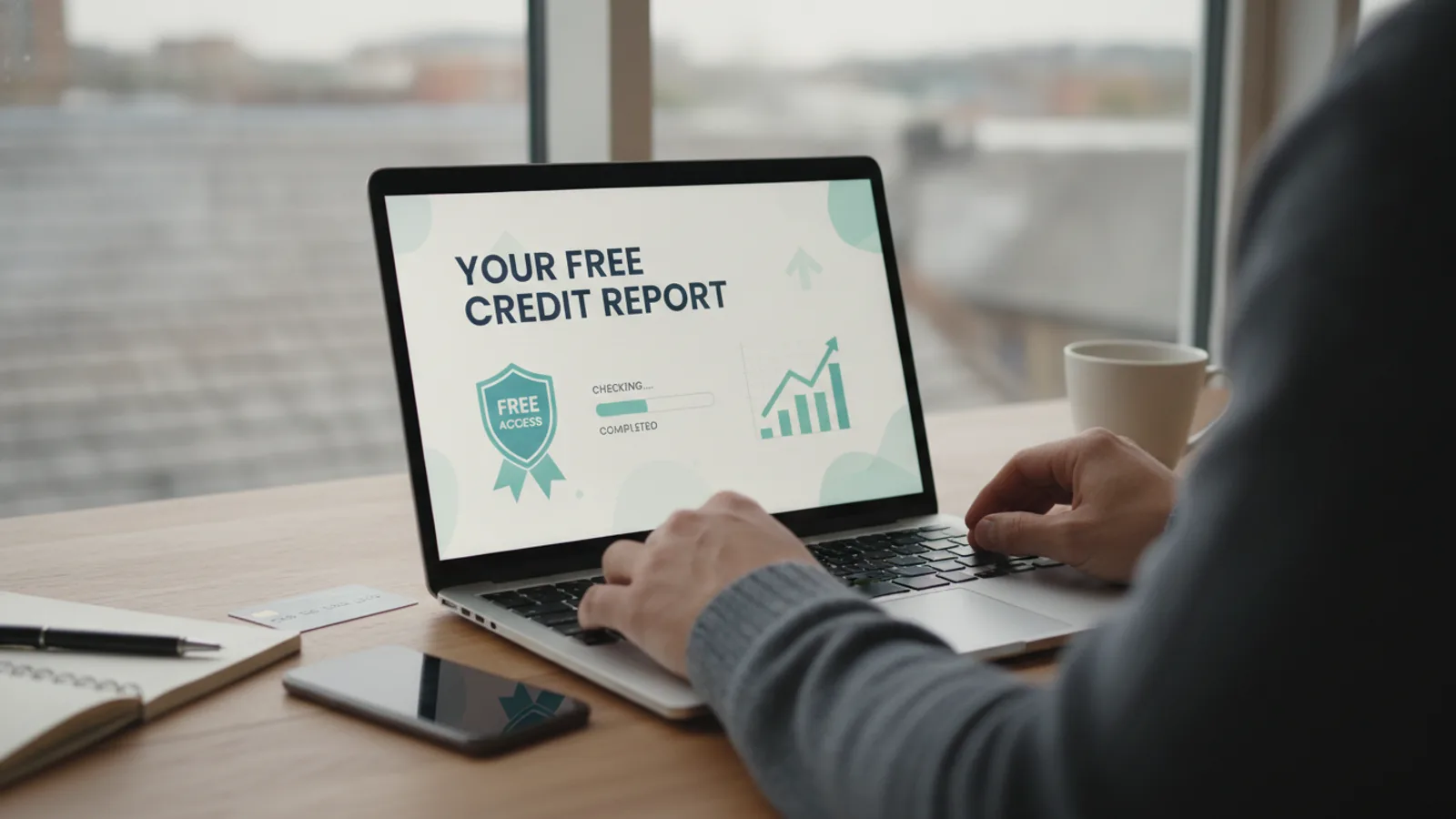
You don't need to go to the CRAs directly and pay. Several well-known companies provide ongoing free access to your report and score from each agency. The business model for these free services is to earn a commission if you take out a credit product (like a card or loan) they show you, but you are never under any obligation to do so.
To get a comprehensive view, sign up for one service from each group:
- For your Equifax report: The most popular free service is ClearScore.
- For your TransUnion report: The main free provider is Credit Karma.
- For your Experian report: Experian now offers its own free "Experian Free" account. The MoneySavingExpert "Credit Club" also uses Experian data.
Signing up to one from each category ensures you can see the data held by all three major CRAs without paying a penny.
Complete the Secure Sign-Up and Identity Verification
Select your first service and begin the registration process. You will be asked to create an account with your email and a strong password. Then, you'll need to provide your personal information as gathered in the preparation step.
Be meticulous here. Enter your name and date of birth exactly as they would appear on a bank statement or driving licence. The most critical part is your address history for the last six years. Any gaps or inaccuracies can cause the identity check to fail.
Finally, you'll face an identity verification quiz. This is designed to ensure you are who you say you are. The questions are based on information from your credit file, such as:
- "In which of these years did you open your current account with [Bank Name]?"
- "Which of these companies is your mobile phone provider?"
- "What is the credit limit on your [Credit Card Name] card?"
Answer these questions to the best of your ability. If you pass, you will be granted immediate access to your credit report and score.
Access and Review Your Credit Score Dashboard
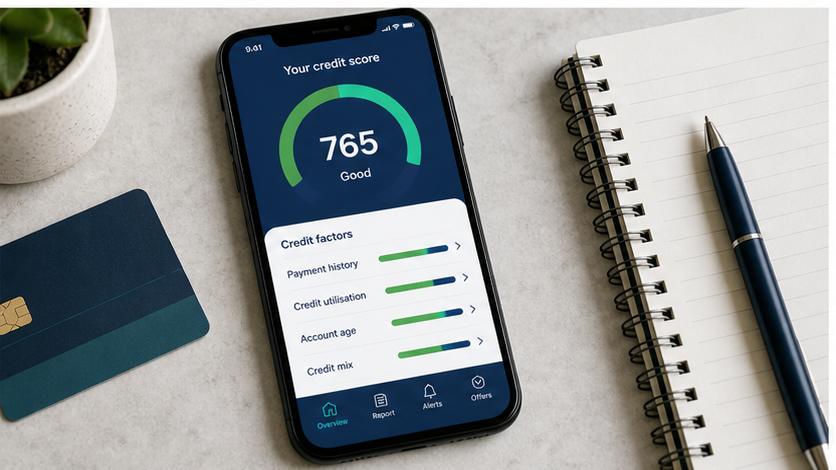
Once you're in, the first thing you'll see is your credit score displayed prominently. While the number is a useful headline figure, the most valuable information is in the full report. Look for sections on the dashboard that break down the factors influencing your score. These are often categorised into things that are 'helping' and 'hurting' your score.
Spend time navigating the dashboard. Familiarise yourself with the main sections, which typically include:
- Accounts: A list of all your credit accounts, such as mortgages, loans, credit cards, and some utility bills.
- Searches: A record of who has looked at your credit file.
- Personal Details: Your name, address, and date of birth as held by the CRA.
- Public Information: Records of court judgments (CCJs), bankruptcies, or IVAs.
Scrutinise Your Full Credit Report for Errors
This is the most important part of the process. Go through your credit report line by line, checking for accuracy. Errors on your report can unfairly lower your score and lead to rejections for credit. Look carefully for:
- Incorrect Personal Details: Check for misspellings in your name or wrong addresses.
- Accounts You Don't Recognise: This is a major red flag for identity fraud.
- Incorrect Account Balances: Check if the outstanding balance on a loan or credit card looks wrong.
- Closed Accounts Showing as Open: An old account you paid off and closed should be marked as 'closed' or 'settled'.
- Incorrectly Registered Missed Payments: If you are certain you made a payment on time but it's marked as late, this is a serious error to correct.
- Fraudulent Searches: Look for 'hard searches' from companies you haven't applied to for credit.
Understand the Key Factors That Shape Your Score
Beyond checking for errors, use the report to understand your financial habits. The services provide analysis to help you see what's driving your score. The main factors are universal across all agencies:
- Payment History: This is the single biggest factor. A consistent record of on-time payments will boost your score. Late or missed payments will lower it significantly.
- Credit Utilisation: This is the percentage of your available credit that you are currently using. For example, if you have a £2,000 credit limit and a £1,000 balance, your utilisation is 50%. Aim to keep this below 30% for the best impact on your score.
- Length of Credit History: A long history of responsibly managing credit is positive. This is why you shouldn't be too quick to close old, well-managed accounts.
- Credit Mix: Lenders like to see that you can responsibly manage different types of credit, such as a credit card, a personal loan, and a mobile phone contract.
- Hard Searches: When you formally apply for credit, the lender performs a 'hard search'. Too many of these in a short period can make you look desperate for credit and can temporarily lower your score.
Set Up Alerts and Monitor Your Report Regularly
Your credit report is not static; it changes every month as lenders provide new data. The free services will automatically update your score and report every 30 days. Most importantly, they offer free email alerts that notify you of significant changes, such as a new account being opened in your name or a sharp drop in your score.
Ensure these alerts are enabled. They are your early warning system for potential identity fraud. Make it a habit to log in and review your report at least once a month, and always before you plan to make a significant credit application, like for a mortgage or car loan. This gives you time to spot and fix any issues before a lender sees them.
Quick Reference
| Situation | Use this | Why |
|---|---|---|
| I want the score most widely used by lenders | An Experian-based report (e.g., from Experian's free service) | Experian is the largest CRA in the UK and is used by a vast number of major lenders for credit decisions. |
| I've found an error on my report | The 'raise a dispute' or 'query data' function within the app/website | This starts the official process (a 'data dispute') for the CRA to investigate the error with the lender who supplied it. |
| My score dropped unexpectedly | The 'changes' or 'alerts' section of your credit report | This will pinpoint the recent activity that caused the change, such as a new search, a missed payment, or a large balance increase. |
| I can't pass the identity verification | Your statutory credit report, requested by post | If online checks fail, you can request your raw data file from the CRA by post, which has a different identity check process. |
Common Problems When You Check Credit Score Free
Even with a straightforward process, you might encounter a few common hurdles. Here’s how to navigate them.
Problem: You Fail the Identity Verification
The Fix: This is a common issue, especially for those with a "thin" credit file (not much credit history) or who have recently moved. First, double-check every detail you entered, especially your address history. Ensure your name matches your financial accounts exactly (e.g., 'Stephen' vs. 'Steve'). If it still fails, you have a legal right to a £2 statutory report from the agency directly, which often has a manual verification process. Contacting the free service's helpdesk can also provide guidance.
Problem: You See Different Scores from Different Services
The Fix: This is not a problem; it's completely normal and expected. Remember the three CRAs are separate businesses with their own scoring formulas and slightly different data. A lender won't decline you simply because your TransUnion score is 680 and your Experian score is 750. They focus on the underlying data in the report – your payment history, debt levels, and overall stability. Focus on the health of your reports, not just the scores.
Problem: You're Worried About All the Product 'Offers'
The Fix: Free credit report services make money by showing you personalised offers for loans and credit cards. They check your eligibility and show you products you're likely to be approved for. You can safely ignore all of these offers. There is no obligation to apply for anything. Think of them as adverts that fund the free service you're using. You can usually adjust your marketing preferences in the account settings if you find them intrusive.
Problem: You Find a "Soft Search" You Don't Recognise
The Fix: Don't panic. There are two types of searches: hard and soft. A hard search happens when you apply for credit. A soft search happens when you check your own score, or when a company checks your file for identity verification or to pre-approve you for an offer. Lenders cannot see soft searches, and they have zero impact on your credit score. If you see a hard search you don't recognise, that is a serious issue that could indicate fraud and should be disputed immediately.
Advanced Tips for Checking Your Credit Score
Once you've mastered the basics, you can use your credit report in more powerful ways to manage your financial reputation.
Add a Notice of Correction
If your report shows a period of missed payments due to a specific life event (e.g., redundancy, illness, or a relationship breakdown), you can add a 'Notice of Correction'. This is a short statement of up to 200 words that you write to explain the circumstances. By law, any lender viewing your file must read this notice as part of their assessment. It doesn't change the data, but it adds crucial context that a human underwriter can consider.
Check and Sever Financial Associations
If you've ever had a joint financial product with someone, like a joint mortgage or bank account, you will be 'financially associated' on your credit report. This means their credit history could affect your ability to get credit, even after you've separated. Check the 'associates' section of your report. If you no longer have any active joint finances with that person, you can contact the CRA and ask for a 'financial disassociation' to sever the link.
Use Your Report to Plan Applications
Before applying for a major loan like a mortgage, review all three of your credit reports at least six months in advance. This gives you time to spot and dispute any errors, pay down high balances to improve your credit utilisation, and ensure you're putting your best foot forward. Avoid applying for any other credit in the 3-6 months leading up to a mortgage application, as multiple hard searches can be a red flag to lenders.
Check Credit Score Free FAQ
Does checking my credit score lower it?
No, absolutely not. When you check your own credit score through a free service, it is recorded as a 'soft search'. These are only visible to you and do not affect your score in any way. A 'hard search', which can affect your score, only happens when you make a formal application for credit.
How often should I check my credit score?
It's good practice to log in and review your full report at least once a month. Lenders typically update the CRAs on a monthly cycle, so this ensures you catch any changes or potential issues promptly. Always check it before planning a significant application for credit.
What is considered a "good" credit score?
This varies by agency. For Experian (out of 999), a score over 880 is generally considered 'Good'. For Equifax (out of 1000), over 530 is 'Good'. For TransUnion (out of 710), over 604 is 'Good'. However, these are just guides. Every lender has its own unique scorecard, and some may focus more on affordability and income than the score itself.
How quickly does my credit report update?
Most lenders send data to the CRAs once every 4 to 6 weeks. This means that if you pay off a credit card today, it might not be reflected on your credit report for over a month. Be patient when you've taken positive actions to improve your score.
Can I check someone else's credit score?
No. It is illegal to check someone else's credit report without their explicit consent. Doing so is a criminal offence under the Data Protection Act. The only exception is with a legally sound reason and proper authorisation, such as a lender processing a formal application.
Final Checklist for Checking Your Credit Score
Work through this list to ensure you've covered all the essential steps for a thorough credit check.
- Gathered your personal details and address history for the last six years.
- Signed up for free services to view reports from all three CRAs: Experian, Equifax, and TransUnion.
- Successfully passed identity verification and accessed your accounts.
- Reviewed your headline credit scores from each agency.
- Conducted a line-by-line review of your full credit reports.
- Checked all personal details, account balances, and payment histories for accuracy.
- Identified any unrecognised accounts or searches that could signal fraud.
- Raised a dispute for any errors you found using the provider's online tool.
- Understood the key factors helping and hurting your scores.
- Enabled email alerts to monitor your file for future changes.