
Check My Credit Score
Checking your credit score is a vital financial health check, much like an MOT for your money. This guide explains how to access your credit report and score from the UK's main credit reference agencies, safely and often for free. Understanding your score is the first step towards improving it, which can unlock better interest rates on mortgages, loans, and credit cards. We'll walk you through the process, highlight common pitfalls, and show you how to read the report you receive.
Fast Answer
- Where to check: Use one of the three main UK Credit Reference Agencies (CRAs): Experian, Equifax, or TransUnion.
- Cost: Free, either via a statutory report or a "free-for-life" service.
- Impact on score: None. Checking your own score is a 'soft search' and is invisible to lenders.
- Key goal: Review your full credit report for errors, not just the three-digit score.
Before You Start
Preparation is simple but essential for a smooth identity verification process. Having this information ready will save you time and prevent you from having to start over. Accuracy is key.
- Full Name: Your current legal name, as it appears on your bank accounts.
- Date of Birth: You'll need your day, month, and year of birth.
- Address History: You must provide all your UK addresses from the last six years, including postcodes. Don't guess; find old bank statements or bills if you're unsure.
- Email Address: A valid, accessible email address for account creation and communication.
- Financial Details (for verification): You may be asked questions about current or past credit agreements, such as a mortgage provider, credit card issuer, or mobile phone contract, to confirm your identity. You don't always need the account numbers, but you need to remember who the accounts are with.
Step-by-Step Instructions
Understand the 'Big Three' Credit Reference Agencies
In the UK, your credit information isn't held in one central place. Instead, three main, independent companies, called Credit Reference Agencies (CRAs), compile and maintain credit reports on consumers. These are Experian, Equifax, and TransUnion.
Lenders don't have to use all three and may only check with one or two when you apply for credit. Because they get data from different lenders at different times, the information on each report can vary slightly. Consequently, the credit score calculated by each agency will also be different. There's no single "universal" credit score. For a complete picture of your credit history, it's wise to check your report with all three agencies over time.
Choose Your Method: Statutory Report or Free Service
You have two main ways to check your score and report for free. Your choice depends on whether you want a one-off snapshot or ongoing access.
- Statutory Credit Report: By law, you have the right to request a copy of all the data a CRA holds on you. This is your Statutory Report. It's a comprehensive, one-time snapshot of your credit file. It contains all the core data but won't include the promotional three-digit "credit score" itself. It's ideal for a detailed, deep-dive check. You can request this directly from each of the three agencies.
- Free-for-Life Services: These are the most popular options. They provide ongoing access to your credit report and score, updated monthly. They make money through targeted advertising for financial products you're likely to be approved for, but there is no obligation to apply. Examples include ClearScore (uses Equifax data), Credit Karma (uses TransUnion data), and Experian's own free service.
Gather Your Personal Information
Before you begin the sign-up process, collect all the information listed in the "Before You Start" section. The most common reason for failing the identity check is an inaccurate address history.
Take a few minutes to write down the month and year you moved into and out of each address over the past six years. If you've lived at one address for the entire period, this will be very quick. If you've moved several times (for example, as a student), be precise. Use old tenancy agreements, council tax bills, or bank statements to confirm the dates if you are uncertain.
Visit an Official Provider and Create an Account
Navigate directly to the official website of your chosen service. For example, you can search for "Experian free credit score", "ClearScore", or "Credit Karma". As mentioned earlier, double-check the URL is correct to avoid phishing sites.
You will be asked to create an account by providing your email address and creating a strong, unique password. You will then be guided through the process of entering your full name, date of birth, and your address history for the past six years. Enter the information exactly as it appears on official documents like your driving licence or bank statements to maximise your chances of being matched to your credit file.
Complete the Identity Verification Process
This is the most critical stage. The CRA needs to be certain that you are who you say you are before showing you sensitive financial data. After you've entered your personal details, you'll be asked a series of multiple-choice security questions.
These questions are generated from information already on your credit file. Examples include:
- "Which of the following lenders have you had a mortgage with in the last 5 years?"
- "In which year did you open your credit card account with Capital One?"
- "Which of these mobile phone providers do you have an active contract with?"
One of the options will always be "None of the above". Do not guess. If you're unsure or know that none of the answers are correct, select "None of the above". An incorrect guess is more likely to cause you to fail verification than admitting you don't recognise the account.
Access and Review Your Credit Report Dashboard
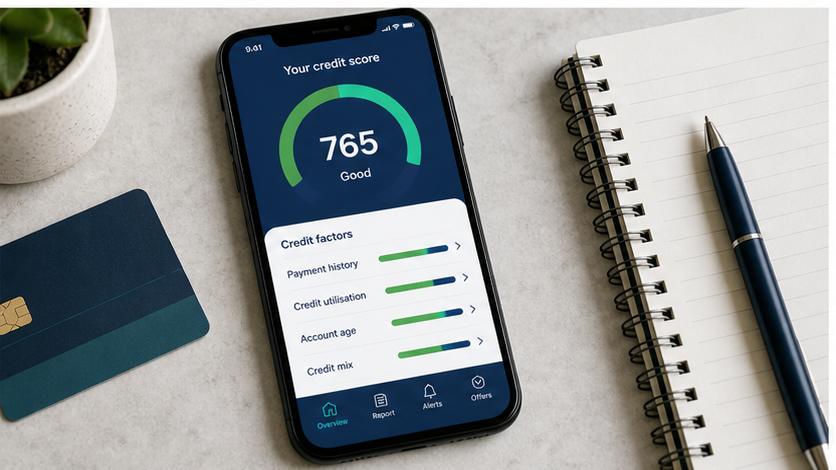
Once you pass the identity checks, you'll be logged into your account dashboard. The first thing you'll likely see is your three-digit credit score, often displayed prominently in a large graphic or gauge. While this number is a useful summary, it's the least important piece of information initially.
Your main task is to locate and open your full credit report. Look for links or tabs labelled "Report", "Credit History", or "Your Information". This is the detailed breakdown of your financial history that lenders see. It includes your personal details, a list of all your credit accounts (both open and closed), your repayment history for the last six years, any court records like CCJs, and a list of searches made on your file.
Scrutinise Your Report for Errors and Inaccuracies
This is the most valuable part of checking your credit report. Go through it line by line with a critical eye. Even small errors can have a big impact on your score and your ability to get credit. Check the following sections carefully:
- Personal Information: Are your name, date of birth, and current address correct? Are there any old addresses listed that you don't recognise?
- Credit Accounts: Do you recognise every account listed? This includes credit cards, loans, mortgages, mobile phone contracts, and some utility accounts. If you see an account you don't recognise, it could be a sign of identity fraud.
- Repayment History: Check the payment status for each month on your open accounts. A green tick or 'OK' is good. A late payment marker (e.g., a yellow '1' for one month late) can significantly damage your score. If you see a late payment recorded for a month you know you paid on time, you should challenge it.
- Financial Associations: This section lists people you are financially linked with, usually through a joint mortgage or bank account. Is there an ex-partner still listed? Their financial behaviour could be affecting your score.
- Searches: Check the list of 'hard searches'. These happen when you formally apply for credit. Do you recognise them all? An unrecognised hard search could be another sign of fraud.
Dispute Any Errors You Find
If you find an error, don't ignore it. You have a legal right to have inaccurate information corrected. The process starts with the credit reference agency, not the original lender. All the CRA websites and apps have a straightforward dispute or query process. You can raise a dispute directly from within your report, usually by clicking a button next to the incorrect entry.
You'll need to explain why you believe the information is wrong and provide any evidence you have (e.g., a bank statement showing a payment was made on time). The CRA will then contact the lender on your behalf. The lender has 28 days to investigate and respond. If they agree it's an error, your file will be corrected and your score recalculated. If they reject the dispute, the CRA will inform you, and you can then take the complaint to the Financial Ombudsman Service.
Quick Reference
| Situation | Use this | Why |
|---|---|---|
| Daily or weekly monitoring | Free-for-life App (ClearScore, Credit Karma etc.) | Provides ongoing access, alerts for changes, and user-friendly interface. |
| Applying for a major loan (e.g., mortgage) | Check reports from all three CRAs | Lenders may use any of the three, and data can differ. A full check avoids surprises. |
| Found a factual error on your report | The CRA's built-in 'Dispute' or 'Query' tool | This is the official channel to start an investigation to correct your data. |
| Concerned about identity fraud | Check the 'Searches' and 'Accounts' sections | Unrecognised hard searches or accounts are red flags that someone may be applying for credit in your name. |
Common Problems When You Check My Credit Score
I can't pass the identity verification questions.
This is common and usually happens for one of two reasons. Firstly, you may have entered your address history incorrectly. Go back and check the dates carefully. Secondly, you may have a 'thin' credit file with very few accounts, meaning the CRA doesn't have enough information to ask you robust security questions. In this case, you may need to request your Statutory Report by post, which involves sending copies of identity documents like a passport and utility bill.
My score is different on another website.
This is completely normal and expected. Each CRA (Experian, Equifax, TransUnion) uses its own data and its own scoring algorithm. Experian's score is out of 999, while Equifax's is out of 1000 and TransUnion's is out of 710. They are not comparable. Focus on the underlying report data, which should be broadly similar across all three. The trend of your score (going up or down) is more important than the specific number.
I've spotted an error but the lender won't agree to remove it.
If your dispute is rejected by the lender and the CRA, your next step is to complain directly to the lender using their official complaints procedure. If you are still not satisfied with their final response after eight weeks, you can escalate your case to the free and independent Financial Ombudsman Service (FOS). The FOS has the power to order the lender to correct your file if they find in your favour.
Advanced Tips for Your Credit Score
- Check Your Electoral Roll Status: Being registered to vote at your current address is one of the quickest and most powerful ways to boost your credit score. Lenders use this to confirm your name and address, which makes you appear more stable. Check your report to ensure you're listed correctly.
- Use Eligibility Checkers: Before you formally apply for a new credit card or loan, use a 'soft search' eligibility checker. Many comparison sites offer this. It will show you your chances of being accepted without leaving a 'hard search' on your file that could lower your score.
- Disassociate from Ex-Partners: If you had a joint financial product (like a mortgage or bank account) with a former partner, they may still be listed as a 'financial association' on your report. If that account is now closed, you can file a 'notice of disassociation' with each CRA to have them removed. This prevents their credit history from affecting yours.
- Review Linked Data: If your name is very common, or you've lived at an address with many occupants (like a block of flats), there is a small chance another person's data could be incorrectly linked to your file. Scrutinise all addresses and accounts to ensure they are definitely yours.
Check My Credit Score FAQ
Does checking my credit score lower it?
How often should I check my credit score?
What is a 'good' credit score?
Can I pay to have negative information removed?
Final Checklist for Checking Your Credit Score
- Gather your details: Have your address history for the last six years ready before you start.
- Use an official source: Sign up directly with Experian, or via ClearScore (Equifax) or Credit Karma (TransUnion).
- Avoid paid trials: Stick to the genuinely free-for-life services that don't ask for payment details upfront.
- Focus on the report, not just the score: The detailed report is what matters. Check every line for accuracy.
- Verify key data points: Confirm your personal details, accounts, payment history, and financial associations are correct.
- Dispute errors immediately: Use the CRA's online dispute process to challenge any inaccuracies you find.
- Set a reminder: Plan to check your report again in a month to monitor for changes and ensure your financial data remains secure.